Ultrasound

Az ultrahang vizsgálat egy biztonságos, fájdalommentes képalkotó eljárás, amely hanghullámokat használ a test belső részeinek vizsgálatára. - MC60 Hatvan

What is an ultrasound examination?

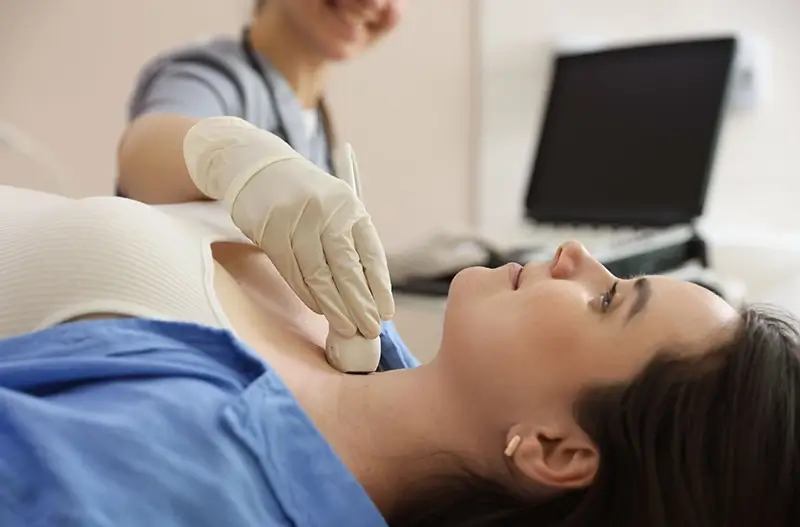
An ultrasound examination is a safe and painless imaging procedure that uses sound waves to examine the internal parts of the body. The sound waves are reflected from organs and tissues, and images are created from these returning signals, which the physician can evaluate. The examination does not use radiation, therefore ultrasound can be repeated and is risk-free at any age, whether for a child, an adult, or a pregnant woman. Ultrasound helps reveal the size, shape, and structure of organs, as well as any possible fluid accumulations, cysts, tumours, or inflammatory changes.

In which cases is an ultrasound examination necessary?

An ultrasound examination may be needed when your doctor wants to check the condition of internal organs or tissues. Common reasons include:

  • Examination of abdominal pain, bloating, or digestive problems
  • Assessment of the liver, gallbladder, kidneys, pancreas, or spleen
  • Examination of the thyroid gland and neck vessels
  • Evaluation of the heart and blood vessels
  • Gynaecological and urological examinations
  • Monitoring foetal development during pregnancy
  • Clarification of swelling, lumps, or inflammation

When can the examination not be performed?

In certain situations, ultrasound may not provide reliable results, or the examination may need to be postponed. Such cases may include:

  • An open wound, severe skin condition, or burn injury in the area to be examined
  • Excessive intestinal gas or air bubbles that interfere with imaging
  • The patient is unable to assume the required body position
  • In rare cases, certain implanted devices or implants may make the examination of specific areas unsuitable

DR. STEFÁN ÁGNES WELCOMES HER PATIENTS FROM NEWBORN AGE, EVEN FROM THE VERY FIRST DAYS AFTER BIRTH!

Az ultrahang vizsgálat egy biztonságos, fájdalommentes képalkotó eljárás, amely hanghullámokat használ a test belső részeinek vizsgálatára. - MC60 Hatvan
What ultrasound examinations are available at MC60?
Targeted soft tissue Ultrasound – muscle injury, lipoma, lymph nodes etc.

This examination assesses the condition of muscles, tendons, fatty tissue (e.g. lipoma), lymph nodes, and other soft tissues. It helps precisely identify injuries, inflammation, or benign lesions.

Preparation:

  • The examined area should be accessible; comfortable clothing is recommended.
  • The examination is painless; no special preparation is usually required.
  • If there is cream or ointment on the skin, please remove it beforehand.
Infant abdominal and hip ultrasound

This examination evaluates the internal organs of infants and the development of the hip joints. It helps detect abnormalities early, such as hip dysplasia or abdominal organ disorders, allowing timely intervention.

When can the examination be performed?

  • Hip screening can be performed between 4 and 12 weeks of age .
  • In premature infants, the age must be adjusted to the original due date. For example, if the baby was born 6 weeks early, the examination can be performed from 6+4=10 weeks of age until 6+12=18 weeks of age.

Preparation:

  • The infant should not be hungry before the examination, but a light feeding may help them remain calm.
  • Comfortable clothing is recommended to allow easy access to the abdomen and hips.
  • The examination is completely painless and requires no special preparation.
Other soft tissue ultrasound – testicular and lymphatic regions

This examination evaluates the condition of the testes, epididymis, and lymphatic regions. It helps detect inflammation, cysts, tumours, or other abnormalities at an early stage, enabling timely treatment.

Preparation:

  • The examined area should be accessible; comfortable clothing is recommended.
  • The examination is painless; no special preparation is usually required.
  • If there is cream or ointment on the skin, please remove it beforehand.
Abdominal + pelvic Ultrasound

This examination evaluates the abdominal organs (liver, gallbladder, kidneys, spleen, pancreas) and pelvic organs (urinary bladder, female or male reproductive organs). It helps detect inflammation, cysts, tumors, stones, or other abnormalities early, allowing prompt treatment.

Preparation:

  • Fasting for 5–6 hours is required (except for young children).
  • Drink plenty of still water.
  • If possible, do not empty the bladder before the examination, especially for pelvic ultrasound.
  • Comfortable clothing is recommended to allow easy access to the examined area.
  • The examination is completely painless and involves no radiation exposure.

Complex oncological Ultrasound – axillary, abdominal, inguinal, pelvic, and cervical regions

This examination assesses multiple regions at the same time: axillary (armpit), abdominal, inguinal (groin), pelvic, and cervical (neck). It supports the early detection of tumors, enlarged lymph nodes, or other pathological processes, allowing timely initiation of appropriate treatment.

Preparation:

  • Fasting for 5–6 hours is required (except for young children).
  • Drink plenty of still water.
  • If possible, do not empty the bladder before the examination, especially for pelvic assessment.
  • Comfortable clothing is recommended to allow easy access to the examined areas.
  • The examination is completely painless and involves no radiation exposure.

Neck soft tissue – Carotid Doppler ultrasound

This examination evaluates the soft tissues of the neck and the main cervical arteries (carotid arteries). Using Doppler technology, not only the structure of the vessels but also the speed and direction of blood flow can be assessed. It helps detect narrowing, calcification, or circulatory disorders that may increase the risk of stroke.

Preparation:

  • No special preparation is usually required.
  • Comfortable clothing that leaves the neck accessible is recommended.
  • Please do not wear a necklace during the examination.
  • The examination is painless and involves no radiation exposure.
Thyroid gland + cervical soft tissue Ultrasound

This examination evaluates the thyroid gland, surrounding neck soft tissues, and lymph nodes. It helps detect nodules, inflammatory changes, cysts, or other abnormalities. It plays an important role in investigating thyroid dysfunction and monitoring known conditions.

Preparation:

  • No special preparation is usually required.
  • Comfortable clothing that leaves the neck accessible is recommended.
  • Please do not wear a necklace during the examination.
  • The examination is painless and involves no radiation exposure.
Knee ultrasound

Knee ultrasound evaluates the soft tissues around the joint – tendons, ligaments, muscles, joint capsule, and fluid collections. It helps detect injuries, inflammation, tears, or fluid accumulation. It is particularly useful in cases of sports injuries, pain, swelling, or limited mobility.

Preparation:

  • No special preparation is required.
  • The knee should be easily accessible; comfortable, loose clothing is recommended.
  • The examination is painless and involves no radiation exposure.
Ultrasound-guided fine needle aspiration biopsy (FNAB) – thyroid

This procedure allows the doctor to precisely locate a thyroid nodule or other abnormality using ultrasound, and then collect a cell sample with a thin needle. The sample is examined in a laboratory, enabling a more accurate diagnosis of thyroid nodules, cystic lesions, or other soft tissue abnormalities. The procedure is quick, usually causes only mild discomfort, and is performed under local anesthesia.

Preparation:

  • No special preparation is usually required.
  • If you are taking blood thinners, please inform your physician in advance.
  • Comfortable clothing is recommended to allow easy access to the examined area.
  • After the procedure, mild tenderness or slight swelling may occur around the thyroid.
Shoulder ultrasound

Shoulder ultrasound evaluates the soft tissues around the joint – tendons, muscles, ligaments, joint capsule, and bursae. It helps detect inflammation, tendon injuries, tears, calcifications, or fluid collections. It is often recommended for shoulder pain, restricted movement, sports injuries, or persistent symptoms.

Preparation:

  • No special preparation is required.
  • The shoulder should be easily accessible; comfortable, loose clothing is recommended.
  • The examination is painless and involves no radiation exposure.
Venous colour Doppler Ultrasound – per limb

This examination evaluates venous circulation in the upper or lower limb. Using color Doppler technology, blood flow becomes visible, allowing the detection of deep vein thrombosis, varicose veins, circulatory disorders, or valve insufficiency. It plays an important role in ruling out blood clots and investigating venous complaints.

Preparation:

  • No special preparation is required.
  • The examined limb should be easily accessible; comfortable clothing is recommended.
  • The examination is painless and involves no radiation exposure.

Why choose us for your ultrasound examination?

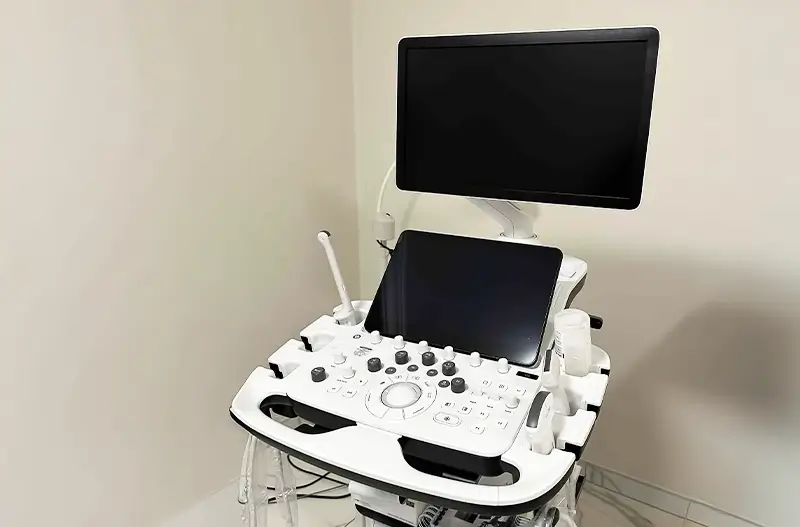
Our institution operates with four brand-new Samsung V6 ultrasound systems, representing the latest in imaging technology. These devices provide high-resolution images, allowing even small abnormalities to be detected with ease, while advanced Doppler functionality enables precise assessment of blood flow.

Our highly qualified specialists perform every examination in a personalized manner, taking individual needs and health conditions into account. One machine is dedicated specifically to screening examinations, ensuring that procedures are carried out quickly, efficiently, and comfortably. The equipment operates quietly and features ergonomic design, guaranteeing both outstanding diagnostic accuracy and patient comfort.

Négy vadonatúj ultrahang géppel gazdagodott intézményünk! – MC60

Our institution's specialists:

Dr. Stefán Ágnes
consultant radiologist

Dr. Hüttner Gábor
candidate for radiologist

Request an appointment by e-mail

Check-in by phone

DO YOU HAVE ANY QUESTIONS?

Contact us!

    Véradás - Medical Center Hatvan
    ADJON VÉRT ÉS MENTSEN ÉLETEKET!

    A mai nap folyamán intézményünkben 15:00-18:00 óra között véradás lesz.

    Várjuk Önt is!
    Pünkösdhétfő - zárvatartás - Medical Center Hatvan
    Dear Patients!
    Our institution is closed today.
    From tomorrow, we look forward to welcoming you at our usual opening hours!
    Ünnepi nyitvatartás, 2024. május 1. - Medical Center Hatvan
    Dear Patients!
    Our institution is closed today.
    Holnaptól a megszokott nyitvatartással várjuk Önöket sok szeretettel!
    Medical Center Hatvan - újév

    Dear Patients!
    Intézményünk a mai napon zárva tart! 01.03-tól várjuk Önöket szeretettel a megszokott nyitvatartási időben.

    Ünnepi nyitvatartás - Medical Center Hatvan

    Dear Patients!
    A mai napon Intézményünk rendhagyó nyitvatartással, 7:00-15:00-ig várja Önöket!

    Medical Center Hatvan - karácsony

    Dear Patients!
    Intézményünk a mai napon zárva tart!
    Online időpontfoglaló rendszerünk továbbra is elérhető.

    Ünnapi nyitvatartás 2023. november 1. - Medical Center Hatvan

    Dear Patients!
    Intézményünk a mai nap zárva tart!
    Holnaptól a megszokott nyitvatartással várjuk Önöket szeretettel!

    október 23. zárva tartás Medical Center Hatvan

    Dear Patients!
    Intézményünk a mai nap zárva tart!
    Holnaptól a megszokott nyitvatartással várjuk Önöket szeretettel!

    Dear Patients!
    Intézményünk 2024.03.29.-2024.04.01. között ZÁRVA tart!
    Kellemes Húsvéti Ünnepeket kíván az MC60 csapata!

    Dear Patients!
    Intézményünk a mai napon ZÁRVA tart. Március 18-tól a megszokott nyitvatartással várjuk Önöket sok szeretettel!